
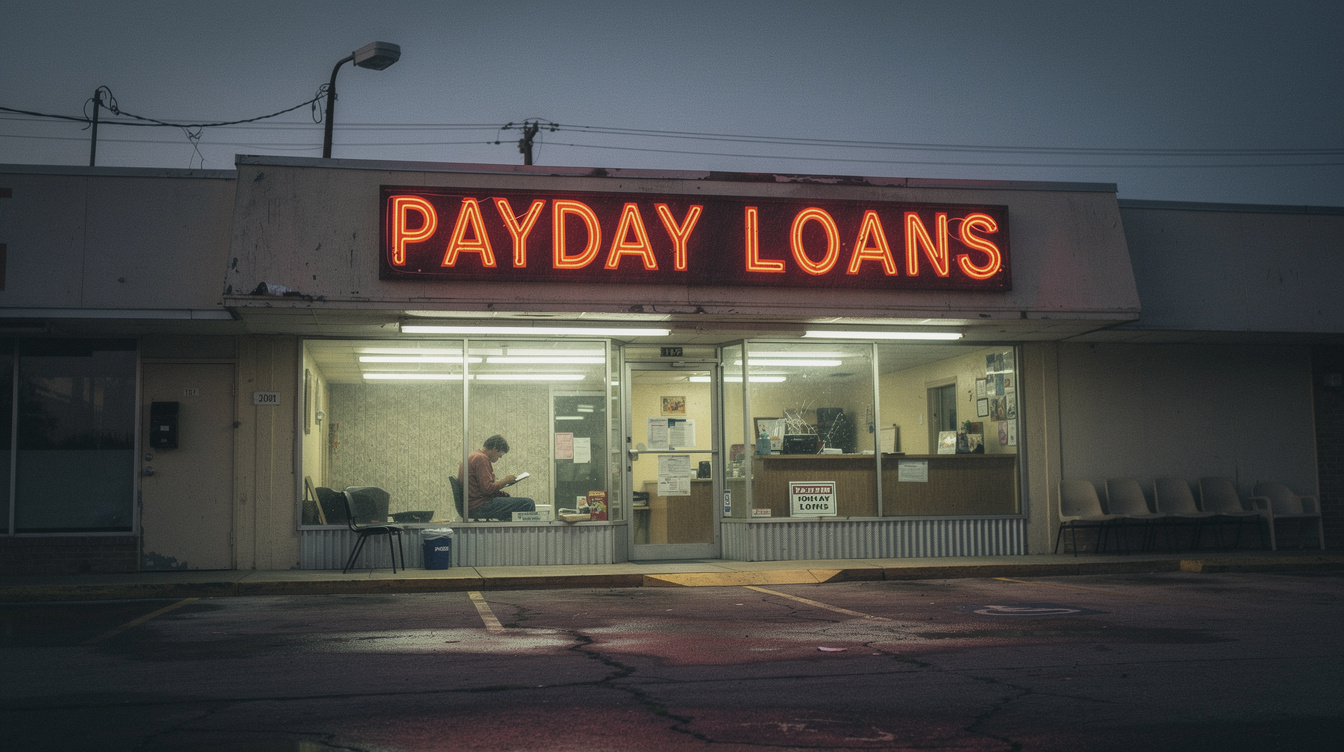
A payday-loan offer deserves extra scrutiny when its real cost is difficult to identify, the repayment date leaves little room for essential expenses, the parties to the transaction are unclear, or refinancing is presented as the normal solution to an unaffordable payment.
In Texas, payday transactions can involve a Credit Access Business and an independent third-party lender. Before signing, identify both parties, verify the business through an official Texas source, record every disclosed charge, confirm the total amount due and payment date, and understand exactly how repayment will be collected.
A high-cost loan is not automatically illegal, and one warning sign alone does not prove that a lender is acting unlawfully. The practical goal is to recognize financial and conduct risks early enough to compare alternatives or seek help before the situation becomes harder to manage.
Warning Signs to Investigate Before You Sign
You cannot easily identify the CAB, lender, legal business name, or role each company plays.
Marketing focuses on the cash amount or one fee while the complete repayment obligation is difficult to determine.
You are discouraged from reading disclosures, comparing another option, or keeping copies of the documents.
Paying the loan would leave too little for housing, food, utilities, transportation, insurance, or existing debts.
The solution to an unaffordable payment is simply another fee, extension, refinance, or new high-cost loan.
A salesperson says something important that does not appear in the disclosure or agreement.
These are risk indicators, not automatic legal conclusions. The actual agreement, applicable law, regulatory status, and circumstances determine whether conduct violates consumer-protection requirements.
How Texas Payday-Loan Arrangements Can Be Structured
Texas payday lending can use a structure involving a Credit Access Business, or CAB. The Texas Office of Consumer Credit Commissioner explains that a CAB obtains credit for a consumer from an independent third-party lender in transactions that can include payday loans.
That distinction matters because the business arranging the transaction and the business extending the credit may not be the same company. A borrower should identify both parties and understand which fees or obligations belong to each part of the transaction.
| Party | Role to Identify | What the Borrower Should Check |
|---|---|---|
| Credit Access Business | Arranges or obtains the credit under the applicable CAB structure. | Legal business name, regulatory status, fees, disclosures, and service agreement. |
| Third-Party Lender | Provides the extension of credit. | Lender identity, finance terms, repayment obligation, and creditor information. |
| Borrower | Accepts the contractual repayment obligations. | Total amount received, total amount due, payment date, authorization, and default consequences. |
Official Texas source:
Texas OCCC — Credit Access Businesses
.
Audit the Documents Instead of Trusting the Advertisement
The safest way to evaluate a payday-loan offer is to translate the paperwork into a short list of concrete facts. Advertising language such as “fast,” “easy,” or “flexible” does not tell you what the transaction will cost or whether the repayment fits your budget.
| Document Fact | Write Down | Why It Matters |
|---|---|---|
| Business identities | CAB name and underlying lender name | You need to know who performs each part of the transaction. |
| Amount received | Actual cash or credit provided | This is the amount you are receiving, not necessarily the amount you will repay. |
| Every charge | CAB fees, lender charges, and any other disclosed costs | Small individual fees can add up to a materially larger total obligation. |
| Total repayment | Total amount expected to be paid | This shows the complete dollar commitment more clearly than one advertised fee. |
| Payment schedule | Exact due date or installment dates | A cost may become unmanageable when too much is due before household cash flow recovers. |
| Payment authorization | ACH debit, check, card, or another method | You should understand when and how money can be taken from the account. |
| Renewal or refinancing | New charges, new due date, and effect on principal | Extending repayment can increase cost without solving the underlying cash-flow problem. |
| Collateral | Any vehicle title or other pledged asset | Collateral changes the consequences of default and requires separate risk review. |
Separate a High-Cost Loan From an Advance-Fee Scam
A risky payday loan and a loan scam are not the same problem. One involves evaluating a real credit agreement; the other may involve a fake lender trying to collect money or sensitive information without providing the promised credit.
The Texas Attorney General specifically warns consumers about advance-fee scams in which a company demands money upfront before providing the promised loan or benefit.
Review:
Texas Attorney General — Cash Advance and Advance Fee Scams
.
How a Payday-Loan Debt Cycle Can Develop
A debt cycle can develop when the repayment obligation falls due before the household has enough cash to repay the loan and still cover normal expenses. New borrowing, refinancing, or another extension can then become the way the borrower fills the new shortfall.
Emergency shortfall
An urgent bill exceeds available cash.
High near-term repayment
A large obligation becomes due from a future paycheck.
New cash-flow gap
Essential bills still have to be paid after the loan payment.
More borrowing
A refinance, extension, or new loan is considered to cover the gap.
Added charges
New borrowing costs increase the amount of future income already committed.
Hypothetical Cash-Flow Example
Consider a purely hypothetical household expecting a $1,400 net paycheck. Essential expenses due before the following paycheck total $1,250. If a short-term loan requires a $600 payment from that paycheck, the household would be $450 short after paying both the loan and essential expenses.
The mathematical problem is not simply that the loan has a fee. The repayment obligation is larger than the household’s available cash-flow margin. A refinance or second loan may postpone the immediate shortage while adding another cost.
This example is illustrative only. It is not a Texas market average, a typical loan, or a statement about any provider’s pricing.
Test the Repayment Against Your Real Budget
A loan can be technically available but still be financially difficult to repay. Before signing, compare the total payment with the income that will actually be available on the due date.
Ask These Questions
- How much money will I actually receive?
- How much will I have to pay in total?
- What income will be available on the payment date?
- What essential expenses must be paid from the same income?
- Would repayment force me to delay rent, food, utilities, insurance, transportation, or another essential bill?
- Would I need another loan to make it to the next paycheck?
- Is a lower-cost payment arrangement or another source of assistance available first?
How to Verify a Texas Payday-Loan Company
Do not rely only on customer reviews, a website badge, an advertising claim, or a company name that sounds familiar. Use official Texas regulatory tools to confirm whether the business appears in the appropriate system.
OCCC maintains licensing information and a Licensee Search. Its complaint portal recommends searching by city and partial street address when identifying a regulated business.
Use the name on the agreement, not only the brand shown in an advertisement.
Keep the address, city, website, telephone number, and any license information shown.
Compare the business information with the OCCC Licensee Search.
If names, addresses, or roles do not match, clarify the discrepancy before providing money or signing.
Official resources:
Texas OCCC
and
OCCC Licensee Search
.
Texas and Federal Consumer Protections Require Careful Scope
Payday-loan regulation in Texas should not be reduced to one blanket statement about legal APRs, fee caps, refinancing, cancellation rights, or loan duration. The rules that apply can depend on transaction structure, business role, contract terms, state law, federal law, and in some situations local requirements.
OCCC identifies Chapter 393 of the Texas Finance Code and Title 7, Chapter 83 of the Texas Administrative Code among the primary statutes and rules relevant to Credit Access Businesses. Consumers who need a current legal overview can also use the Texas State Law Library’s payday-loan guide.
Official regulatory source:
OCCC — Credit Access Businesses
.
Texas legal-information source:
Texas State Law Library — Payday Loans
.
Local rules require local verification.
A rule adopted by one Texas municipality should not be presented as a statewide rule. If a city ordinance may affect a specific transaction, confirm its current text, geographic scope, and applicability through the official city code or another authoritative legal source.
Collection Problems Require a Different Legal Analysis
Loan pricing, loan servicing, and debt collection are related but legally distinct issues. If an unpaid payday loan is being collected, the rights and rules can depend on who is collecting the debt and what stage the matter has reached.
TexasLawHelp explains that debt collectors are subject to restrictions on false statements and certain threatening or harassing conduct. If you receive an actual court notice, lawsuit, or other legal document, do not treat it like an ordinary collection call.
Consumer legal information:
TexasLawHelp — Debt Collection
.
If you have been sued in Texas Justice Court, TexasLawHelp also provides a
guide to responding to a debt-collection case
.
Compare Alternatives Based on the Emergency You Are Solving
An alternative is useful only if it is actually available, affordable, and timely enough for the problem. Instead of searching for one universal substitute for payday lending, start with the type of expense that created the cash shortage.
| Option to Investigate | May Help When | Important Caveat |
|---|---|---|
| Payment arrangement with the bill provider | The emergency is a medical bill, utility bill, rent-related charge, or another existing obligation. | Terms and availability vary; ask about fees and consequences before agreeing. |
| Employer assistance | An employer offers emergency assistance or access to already-earned wages. | Availability, cost, and payroll effects depend on the employer or provider. |
| Community assistance | The need concerns essential housing, food, utilities, transportation, or another basic necessity. | Programs can have location, income, documentation, or funding limits. |
| Credit-union or other small-dollar credit | A borrower qualifies for membership and a suitable product is available. | Compare APR, fees, eligibility, term length, and total repayment rather than assuming it is automatically cheaper. |
| Personal installment loan | A longer structured repayment period better matches the expense and budget. | Approval and terms vary; compare total repayment with the payday option. |
| Nonprofit credit counseling | Multiple debts or recurring cash-flow problems are becoming difficult to manage. | Counseling is not the same as guaranteed debt reduction, and individual recommendations depend on the borrower’s full situation. |
What to Do If You Are Already Struggling With a Payday Loan
If repayment is already becoming difficult, start by preserving information and understanding the current obligation before taking another high-cost loan.
- Gather every document. Keep the signed agreement, CAB agreement if applicable, cost disclosures, payment authorizations, receipts, emails, text messages, screenshots, and account statements.
- Reconstruct the payment history. Record how much you received, every payment made, every fee charged, and the balance the company says remains due.
- Identify each company. Determine which business is the CAB, lender, servicer, or collector and keep contact details for each.
- Contact the lender or appropriate company promptly. Ask what repayment options are actually available. Do not assume an extended plan is guaranteed or free.
- Avoid automatically replacing one unaffordable obligation with another. New high-cost borrowing may move the due date while increasing the amount of future income committed to debt.
- Use the correct complaint or legal-help path. A pricing dispute, unauthorized debit, collection problem, lawsuit, or title-related issue may require different assistance.
- Get prompt legal help when the stakes become legal or collateral-related. Court papers, threatened litigation, vehicle-title issues, repossession risk, or confusing collection notices deserve timely review by a qualified Texas legal-aid organization or attorney.
The CFPB advises borrowers who are struggling to repay a payday loan to contact the lender promptly and ask what options may be available; extended repayment options depend on applicable law and lender policy.
Review the CFPB guidance
.
Records to Preserve If You Dispute the Loan or Collection Conduct
A clear record can make it easier to explain what happened to the company, regulator, credit counselor, legal-aid organization, or attorney.
Loan agreement, CAB agreement, disclosures, and payment authorization.
Screenshots, mailers, emails, texts, or other representations that affected the decision.
Receipts, bank statements, debit attempts, and payment confirmations.
Dates, names, phone numbers, emails, letters, and notes from conversations.
Notices, collector information, account statements, and court documents.
Submission dates, reference numbers, attachments, and company responses.
Where Texas Borrowers Can Ask for Help or File a Complaint
The appropriate complaint path depends on the business and the problem. A borrower may need state regulatory assistance, a federal complaint route, consumer legal information, or individual legal advice.
Texas OCCC
OCCC regulates multiple non-depository consumer-credit industries and provides a complaint route that includes payday and auto-title loans.
Consumer Financial Protection Bureau
CFPB accepts consumer complaints involving payday loans and other consumer financial products and services.
TexasLawHelp
TexasLawHelp publishes consumer legal information about payday loans, debt collection, and responding to certain debt lawsuits.
Frequently Asked Questions
Does a high APR automatically make a Texas payday loan illegal?
Not by itself. Whether a transaction or charge violates applicable law depends on the product structure, parties, contract, and current state, federal, and potentially local rules. Review the actual documents and current authoritative legal sources.
What is a Credit Access Business?
OCCC describes a CAB as a business that obtains credit for a consumer from an independent third-party lender in transaction types that include payday and motor-vehicle-title loans.
How can I verify a payday-loan company in Texas?
Record the legal business name and location shown in the paperwork, then use the Texas OCCC Licensee Search and related regulatory resources to compare the information.
Is refinancing always a predatory practice?
No. Refinancing by itself does not prove unlawful or predatory conduct. The important questions are what new fees or obligations are created, whether principal is reduced, and whether the new payment structure improves or worsens affordability.
What should I do if I cannot make the next payment?
Review your agreement and payment authorization, contact the appropriate lender or company promptly, ask what options are actually available, preserve all records, and consider nonprofit counseling or legal assistance rather than automatically taking another high-cost loan.
Can a payday loan help rebuild my credit?
The CFPB states that payday loans generally are not reported to the three major nationwide credit reporting companies, so they are unlikely to help build credit in the way some other products may. Collection activity can create separate credit consequences.
Should I use debt consolidation or settlement to fix a payday-loan problem?
Those options are not automatically appropriate for every borrower. Their cost, eligibility, legal consequences, and suitability depend on the person’s complete financial situation. Individual advice may require a qualified nonprofit counselor or attorney.
What if I receive court papers about the debt?
Do not ignore an actual lawsuit or court notice. Review the deadline and consider qualified Texas legal assistance promptly because court procedures and available defenses depend on the individual case.
Sources and Consumer Resources
Texas Office of Consumer Credit Commissioner — Credit Access Businesses
Texas OCCC — Licensee Search
Texas OCCC — Consumer Complaint Portal
Texas State Law Library — Payday Loans
Texas Attorney General — Cash Advance and Advance Fee Scams
TexasLawHelp — Payday Loans
TexasLawHelp — Debt Collection
Consumer Financial Protection Bureau — If You Cannot Repay a Payday Loan
Consumer Financial Protection Bureau — Submit a Complaint
Last reviewed: September 29, 2026
This article provides general consumer-finance education and is not legal advice, individualized financial advice, or a determination that any specific lender or transaction is unlawful. Texas law, federal rules, local ordinances, provider status, fees, products, and complaint procedures can change. Verify current official sources and the specific written agreement before making a financial or legal decision.
Disclaimer: This blog does not offer tax, legal, financial planning, insurance, accounting, investment, or any other type of professional advice or services. Before acting on any information or recommendations provided here, you should consult a qualified tax or legal professional to ensure they are appropriate for your specific situation.

Brian Shaw is a seasoned author and financial expert specializing in budget planning and debt management. With a keen focus on economic analysis and financial strategies, he offers valuable insights into consumer issues and cash management solutions. Brian’s expertise extends to lending trends and loan guidance, helping readers navigate the complexities of financial services and achieve greater financial security. Through his work, he empowers individuals to make informed financial decisions and develop effective money management practices.