
Why Are Payday Loans in Texas a Unique Financial Solution?
I believe payday loans are a vital financial service because they provide immediate relief for urgent expenses. Many Texans face unexpected financial challenges, and payday loans offer a quick solution. However, the high-interest rates associated with these loans can lead to significant debt if not managed carefully.
At SouthLakeTxHomeLoans, we specialize in Personal & Payday Loans in Houston, TX, helping individuals achieve financial stability during emergencies. Our goal is to empower borrowers with the knowledge they need to make informed decisions.
This guide will cover key aspects of payday loans in Texas, including regulations, interest rates, consumer protections, and strategies for responsible borrowing.
- Overview of payday loan regulations in Texas
- Comparison of interest rates with other states
- Consumer protections available for borrowers
- Impact of regulatory changes on loan terms
- Strategies to avoid common pitfalls
What Are the Key Features of Payday Loans?

Payday loans in Texas are characterized by their short-term nature, designed for immediate financial relief. These loans typically range from 0 to strong,500 and are due on the next payday. The primary feature of payday loans is their high-interest rates, often exceeding 400% APR.
Accessibility is a hallmark of payday loans, with minimal requirements for borrowers. Typically, proof of income and an active bank account suffice. However, this ease can lead to a cycle of debt, as borrowers may roll over loans when unable to repay on time, incurring additional fees.
- Short-term financial relief
- Loan amounts from $100 to $1,500
- High-interest rates exceeding 400% APR
- Minimal requirements for borrowing
- Potential for a cycle of debt
What Is the Role of the Texas Office of Consumer Credit Commissioner?
The Texas Office of Consumer Credit Commissioner (OCCC) oversees the payday lending industry, enforcing laws to protect consumers. This regulatory body issues licenses to lenders and monitors compliance with regulations.
Through its oversight, the OCCC ensures lenders provide clear disclosures of loan terms and fees. The agency also addresses consumer complaints, advocating for borrowers facing issues with payday lenders. Understanding the OCCC’s role is crucial for borrowers, as it highlights the protections available under Texas law.
How Do Interest Rates Compare to Other States?
Interest rates for payday loans in Texas are significantly higher than in many other states. Texas allows lenders to charge fees that can lead to APRs exceeding 600%. This stark contrast is evident when comparing states with stricter regulations, such as New York and Massachusetts, where rates are capped at 25% or lower.
Understanding these differences is essential for Texans seeking financial assistance. High rates can lead to a challenging cycle of debt, emphasizing the need for careful consideration before borrowing.
| State | Maximum APR |
|---|---|
| Texas | Exceeds 600% |
| New York | 25% |
| Massachusetts | 25% |
What Are the Consumer Protections in Place?
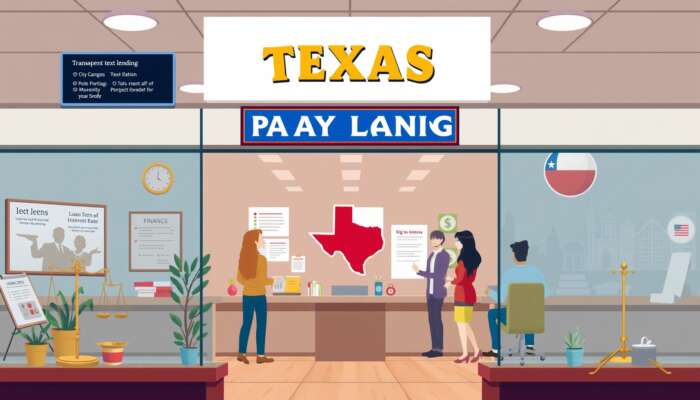
Texas has implemented consumer protection laws to ensure transparency in payday lending. Key protections include requirements for lenders to disclose loan terms, interest rates, and fees clearly. This transparency allows borrowers to make informed decisions about their financial commitments.
Additionally, Texas law limits loan rollovers, which can trap borrowers in cycles of debt. The OCCC can investigate lending practices and enforce penalties against non-compliant lenders, creating a safer borrowing environment.
- Clear disclosures of loan terms
- Limitations on loan rollovers
- Authority to investigate lending practices
- Penalties for non-compliance
- Empowerment of consumers through education
How Do Regulatory Changes Impact Borrowers?
Regulatory changes in Texas significantly affect payday loan terms, influencing borrowing costs and accessibility. Stricter regulations can lead to more favorable terms for borrowers, while deregulation may increase costs.
Recent legislative efforts have responded to consumer advocacy, aiming to address high-cost loans. Staying informed about these changes is essential for borrowers, as they can directly influence financial obligations.
What Are the Consequences for Non-Compliance?
Lenders who fail to comply with Texas payday loan regulations face serious consequences. The OCCC can impose fines and revoke licenses for non-compliance, deterring predatory practices.
Non-compliance can also damage a lender’s reputation, decreasing trust among potential borrowers. This underscores the importance of maintaining compliance within the payday lending industry.
How Do Texas Laws Limit Loan Amounts?

What Are the Maximum Loan Amounts Allowed?
Texas law limits payday loan amounts to protect consumers from excessive debt. Generally, the maximum loan amount ranges from $100 to $1,500, depending on the borrower’s ability to repay.
These restrictions promote responsible lending practices, ensuring borrowers do not overextend themselves financially. Understanding these limits is crucial for making informed borrowing decisions.
What Are the Fees Associated with Payday Loans in Texas?
How Do Fees Impact the Total Cost of Borrowing?
The fees associated with payday loans in Texas can significantly impact the total cost of borrowing. Lenders typically charge a flat fee for each $100 borrowed, leading to substantial costs when annualized.
Borrowers should assess both initial borrowing costs and potential long-term financial obligations. Understanding the fee structure is essential for avoiding financial pitfalls.
| Loan Amount | Typical Fee | APR |
|---|---|---|
| $100 | $15 | 390% |
| $1,000 | $150 | 600% |
What Resources Are Available for Consumer Protection?
Various resources are available for consumers seeking guidance regarding payday loans in Texas. The OCCC provides essential information about consumer rights and assistance for individuals facing issues with lenders.
Numerous nonprofit organizations focus on financial education and consumer protection, offering workshops and counseling services. Accessing these resources empowers borrowers to make informed decisions.
Disclaimer: This blog does not offer tax, legal, financial planning, insurance, accounting, investment, or any other type of professional advice or services. Before acting on any information or recommendations provided here, you should consult a qualified tax or legal professional to ensure they are appropriate for your specific situation.

Brian Shaw is a seasoned author and financial expert specializing in budget planning and debt management. With a keen focus on economic analysis and financial strategies, he offers valuable insights into consumer issues and cash management solutions. Brian’s expertise extends to lending trends and loan guidance, helping readers navigate the complexities of financial services and achieve greater financial security. Through his work, he empowers individuals to make informed financial decisions and develop effective money management practices.
I appreciate your deep dive into the intricacies of payday loan regulations and the dual nature of these financial solutions. As you mentioned, while payday loans can provide quick access to funds in emergency situations, the high-interest rates and potential for debt accumulation raise important questions about their long-term impact on individual financial health.