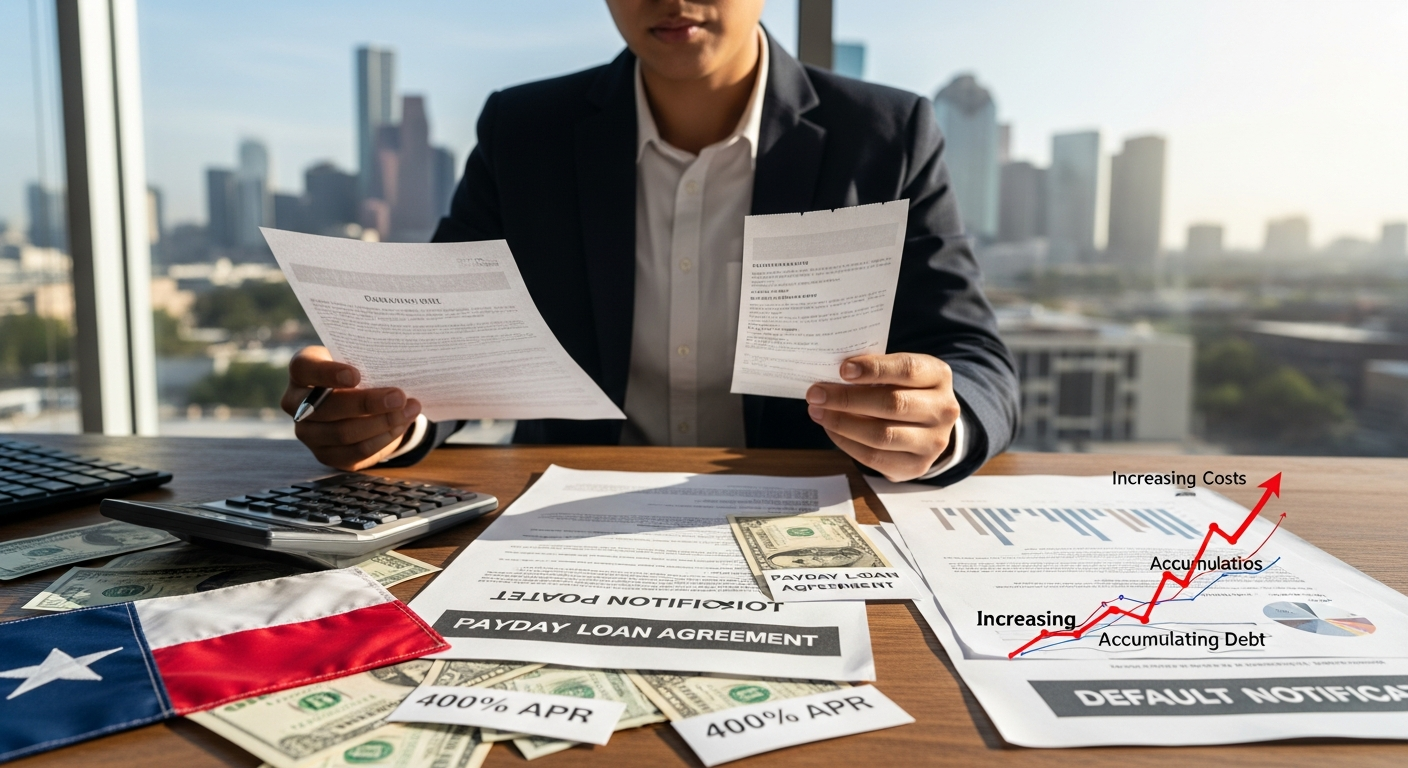
A payday loan default can snowball fast in Texas, turning a small short-term loan into fees, collections, and long-term credit damage. If you need the step-by-step recovery path, start with these Texas default recovery strategies and then come back here for the cost breakdown.
At a glance
The biggest financial impact of default is not just the missed payment. Texans can face repeat fees, bank withdrawal problems, collections, credit report damage, and higher costs when borrowing again.
If the goal is to stop the cycle, use this page to understand the fallout, then move to the recovery guide or the Texas payday loan protections guide for the state-specific rules that shape your next move.
What Default Usually Costs Texans
The original loan balance is only part of the problem. Once a payday loan goes unpaid, the lender may add fees, attempt repeated withdrawals, transfer the account to collections, or pursue legal collection activity where allowed. The exact path depends on the contract and lender practices, but the financial stress typically comes from a combination of fast-moving charges and limited time to respond.
That is why many borrowers first look for a quick exit, then need a more durable plan. If you are still deciding what kind of help makes sense, the Texas payday loan alternatives guide can help you compare lower-cost options before you borrow again.
The Financial Impact By Stage
| What happens | Typical Texas impact | Why it matters | Best next move |
|---|---|---|---|
| Missed due date | Late charges or rollover pressure may start immediately. | The debt can grow before you have time to recover. | Review the loan terms and stop the balance from compounding. |
| Returned payment or failed withdrawal | NSF fees or repeated debit attempts can hit the account. | Your checking balance may drop further, creating new overdraft costs. | Monitor your bank account closely and document each attempt. |
| Collections stage | Collectors may contact you, and the balance may include collection costs. | The debt becomes harder to resolve casually and more stressful to manage. | Use written communication and keep every record. |
| Credit and borrowing fallout | Future credit access may shrink, and costs for new borrowing can rise. | One default can affect rent applications, loans, and household planning. | Start rebuilding with on-time payments and lower-risk credit products. |
| Longer-term strain | Savings disappear, emergency buffers shrink, and stress rises. | The default can affect monthly stability well beyond the original loan. | Build a realistic repayment and prevention plan before taking new debt. |
Credit, Collections, And Legal Pressure
The credit damage from payday loan default is one of the most expensive side effects because it changes the price of everything else you may need to borrow later. Even if a lender does not report the debt the way a credit card issuer would, missed payments and collection activity can still create lasting financial obstacles through outside collection records, bank account problems, or future lending denials.
That is also why the collection stage deserves careful handling. If a borrower does not know how to respond, the debt can become noisier and more expensive than it needs to be. For practical wording, payment negotiation ideas, and boundary-setting tips, see how Texans can handle payday loan debt collectors.
Legal risk depends on the lender, the contract, and what collection actions are permitted. Even when the immediate issue is financial rather than court-related, a default can still create legal expense pressure if the account escalates. The important point is to treat the problem early, before collection costs and account damage multiply.
How Texans Can Limit The Damage
1) Confirm the actual balance
Ask for a written breakdown of principal, fees, and any collection charges so you know what is valid and what is still negotiable.
2) Protect your cash flow
If the lender has access to your bank account, prioritize rent, food, utilities, and transportation before anything else and watch for duplicate or repeated debits.
3) Replace high-cost borrowing
A credit union, community bank, or another lower-cost option may be safer than rolling the debt forward. The best fit depends on your timeline and your credit profile.
4) Get the next plan in writing
Whether you negotiate or settle, keep records. Written terms reduce confusion and help you avoid paying the same debt twice.
If your situation is already leaning toward repeated rollovers or a debt trap, the most useful next read is fixes for Texas payday loan debt trap situations, because it focuses on the tactics borrowers can use before the balance gets out of control.
Prevention Matters Because The Costs Compound
Texans usually avoid the worst effects of default when they treat payday loans as a last resort and keep a small emergency cushion, even if the cushion is built slowly. A modest buffer can be enough to avoid a rollover, a bounced payment, or another high-cost loan to cover the first one.
Understanding the contract is also part of prevention. Loan terms, fees, repayment timing, and withdrawal permissions matter more than the loan amount itself. If you want a clearer read on the fine print before borrowing again, the payday loan contract reading guide is a useful companion piece.
For readers comparing broader credit options, the safest long-term move is usually to plan the next borrowing decision before the emergency hits. That is where lower-cost emergency alternatives can make a real difference.
Need the action plan, not just the damage report?
If your payday loan is already in default, move straight to the recovery steps and settlement approach rather than waiting for the balance to grow.
Faqs
What Happens If You Default On A Payday Loan?
The lender may add fees, attempt repeated withdrawals, send the account to collections, and pursue other collection actions allowed by the loan agreement and applicable rules.
Can You Get In Trouble For Not Paying Back A Payday Loan?
Yes, because the debt can trigger collection contact, added costs, and potential legal or account-related consequences depending on the lender and the loan terms.
Do Payday Loans Go Away After 7 Years?
Some negative credit items can remain on a credit report for years, but the debt itself does not simply disappear just because time passes, so it is better to address it directly.
How To Legally Get Out Of Payday Loans?
The safest path is usually to review the contract, confirm the balance, negotiate in writing, consider lower-cost repayment options, and get help from a trusted counselor if the debt is already unmanageable.
What Happens If I Never Pay Back A Payday Loan?
The debt can keep creating pressure through fees, collections, banking problems, and credit fallout, making future borrowing and household budgeting harder over time.
Disclaimer: This blog does not offer tax, legal, financial planning, insurance, accounting, investment, or any other type of professional advice or services. Before acting on any information or recommendations provided here, you should consult a qualified tax or legal professional to ensure they are appropriate for your specific situation.

Josh Harrington is a seasoned author and financial expert specializing in budget planning, consumer finance, and economic analysis. With a focus on debt management and cash solutions, he provides valuable insights and practical tips on budgeting, lending trends, and financial security. Through his work, Josh empowers individuals and businesses to make informed financial decisions, navigate loan processes, and achieve efficient money management.
Your breakdown of the implications of payday loan defaults in Texas really highlights a troubling pattern that many people may not fully grasp until they’re in the thick of it. It’s disheartening how quickly those small loans can spiral into extensive financial distress. Having witnessed a friend grapple with repeated overdraft fees and relentless collection calls, it’s clear that the system often traps borrowers instead of providing the support they need.